When Kathie and I bought a second home the Champlain Valley, the village welcomed us with a gift-bag that included a copy of Kristin Kimball’s bestselling book The Dirty Life. We soon discovered a constellation of community-supported farms, artisanal butchers, bakers, fromagers, brewers, vintners, and distillers. Summertime farmers markets draw vendors from the mid-Hudson region and Saint Lawrence Valley. Some local products reach as far as New York City. Many of these growers and producers engage in cross-marketing. Shoppers visiting one farm store might find foodstuffs from others. A growing Amish community operates cash-and-carry roadside stands offering an array of seasonal victuals and handcrafts. Supermarkets might offer savings, but not the satisfaction of knowing one’s diet is sourced from sustainable agriculture.
Professional artists scattered throughout the Adirondacks draw inspiration from their surroundings, but many show their work elsewhere. Visitors to the region will be hard pressed to find an art market comparable to the New England Coast, western North Carolina, or northern New Mexico. One finds instead a collection of insular art scenes that are often inclusive to a fault. Regional artists with national reputations shy away from such venues for obvious reasons, creating a schism between credentialed professionals and avocational enthusiasts. A handful of serious talents such as sculptor Matt Horner have developed clientele by word of mouth, and exhibiting at farmers’ markets. Others show their work at cooperative venues such as Adirondack Artists Guild in Saranac Lake, and other nonprofits such as Recovery Lounge in Upper Jay, and private venues such as Corscaden Barn Gallery in Keene Valley, Keene Arts in Keene, and The Mill in Westport.
I was raised in the Delaware Valley, where artists such as Wharton Eshrick and George Nakashima seldom relied on gallery representation, like many artists living today within the orbits of Santa Fe, Taos, and Asheville. The more successful roadside farm stands evolved into well-stocked retail establishments. Some Pennsylvania Amish still peddle their goods at the Reading Terminal Market in Center City Philadelphia. Crafts artists had long flourished in the region, such as cabinetmaker Benjamin Randolph, ironworkers Samuel Yellin and Albert Paley, and ceramists William Daley, Henry Chapman Mercer, Rudolph Staffel, Jack Thompson, Toshiko Takaezu, Paula and Robert Winokur. Brandywine Print Workshop, The Clay Studio, and The Fabric Workshop promoted collaborations between artists working in crafts and studio art, in an environment where hierarchical distinctions wielded less authority.
I also found similar cross-disciplinary traditions in Asheville and Maine. New Mexico and the Veneto region of Italy promoted cultural tourism via historic itineraries such as El Camino Real del Adentro and the Via Claudia Augusta. Agrotourism has become a significant part of Europe’s visitor economy. Working farms offer vacation lodgings, dining facilities, cooking classes, livestock experiences, and workshops that reconnected their guests to the land. The Adirondacks seem to be ripe for such initiatives, and not without precedent.
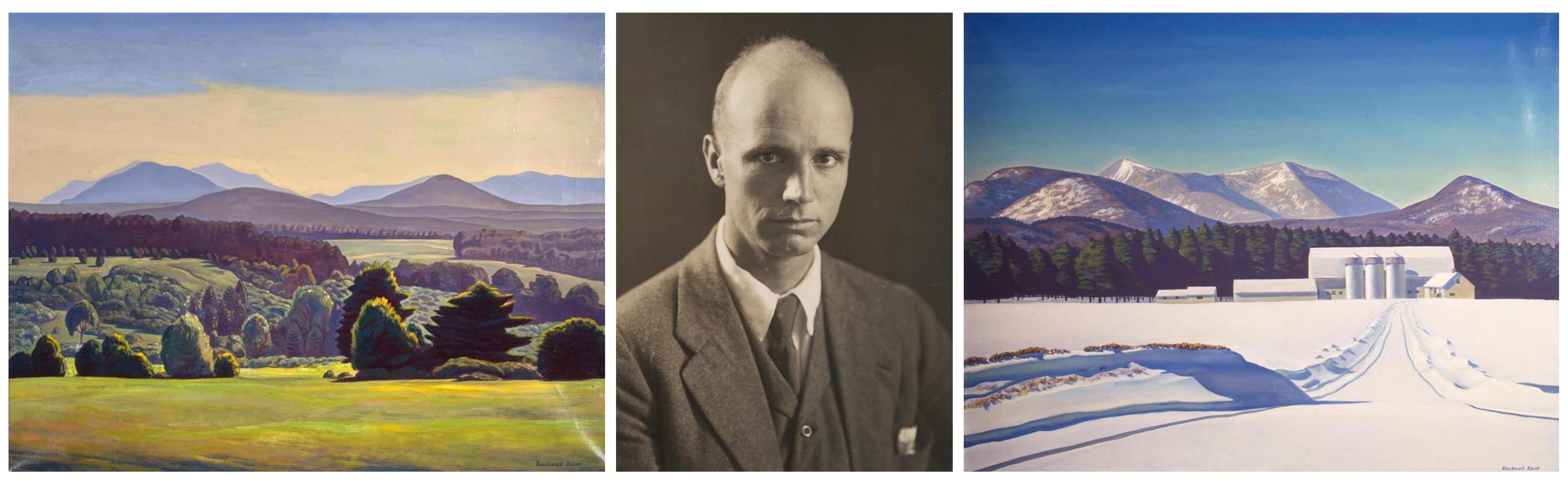
Rockwell Kent was a prolific writer and artist who worked in a wide range of media, from painting and printmaking to ceramics and textiles. Kent was also a farmer. My visit to Asgaard Farm in the Ausable Valley reminded me more of places from my Bucks County boyhood than a hardscrabble homestead like John Brown Farm. I was reminded also of playwright Arthur Miller, who rented his fields to local growers, dabbled with tree farming, and harvested his own firewood, which sometimes he allowed me to split. Arthur furnished his rural Connecticut farmhouse with his own handiwork, including a coffee-table made from a salvaged head-locking cow-stall. Miller and Kent may have lived like gentleman farmers, but both were committed to social justice, human rights and free expression. I never knew Rockwell Kent, but Miller’s yeoman heart was wedded to the land like an oak. North Country food producers have built a vibrant and far-flung network. Professional artists might follow the farmers’ playbook to invigorate their own community.
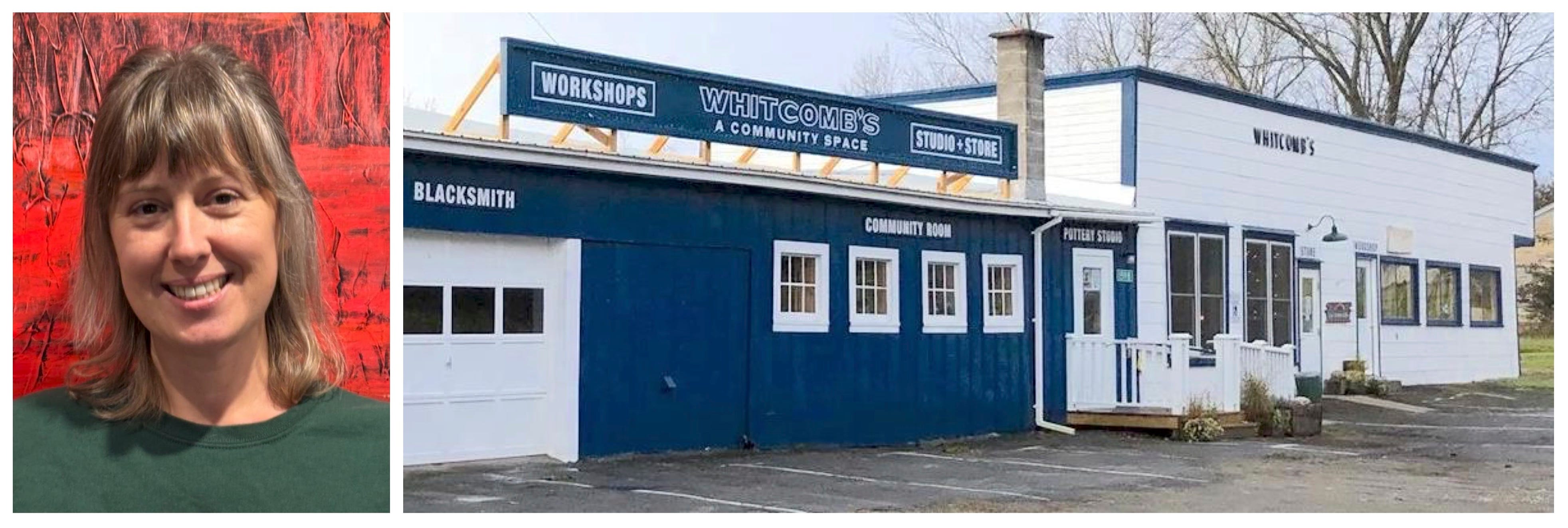
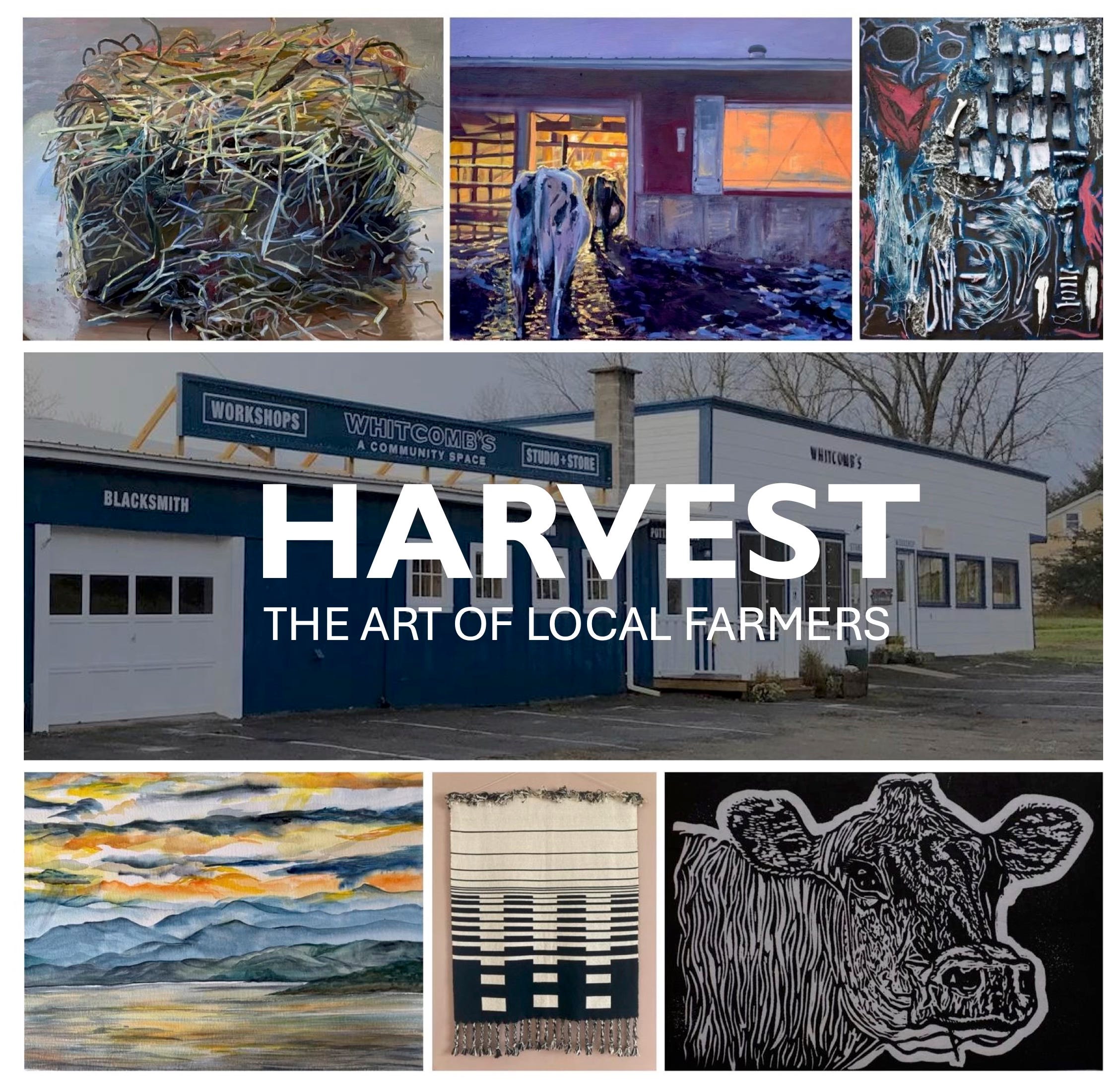
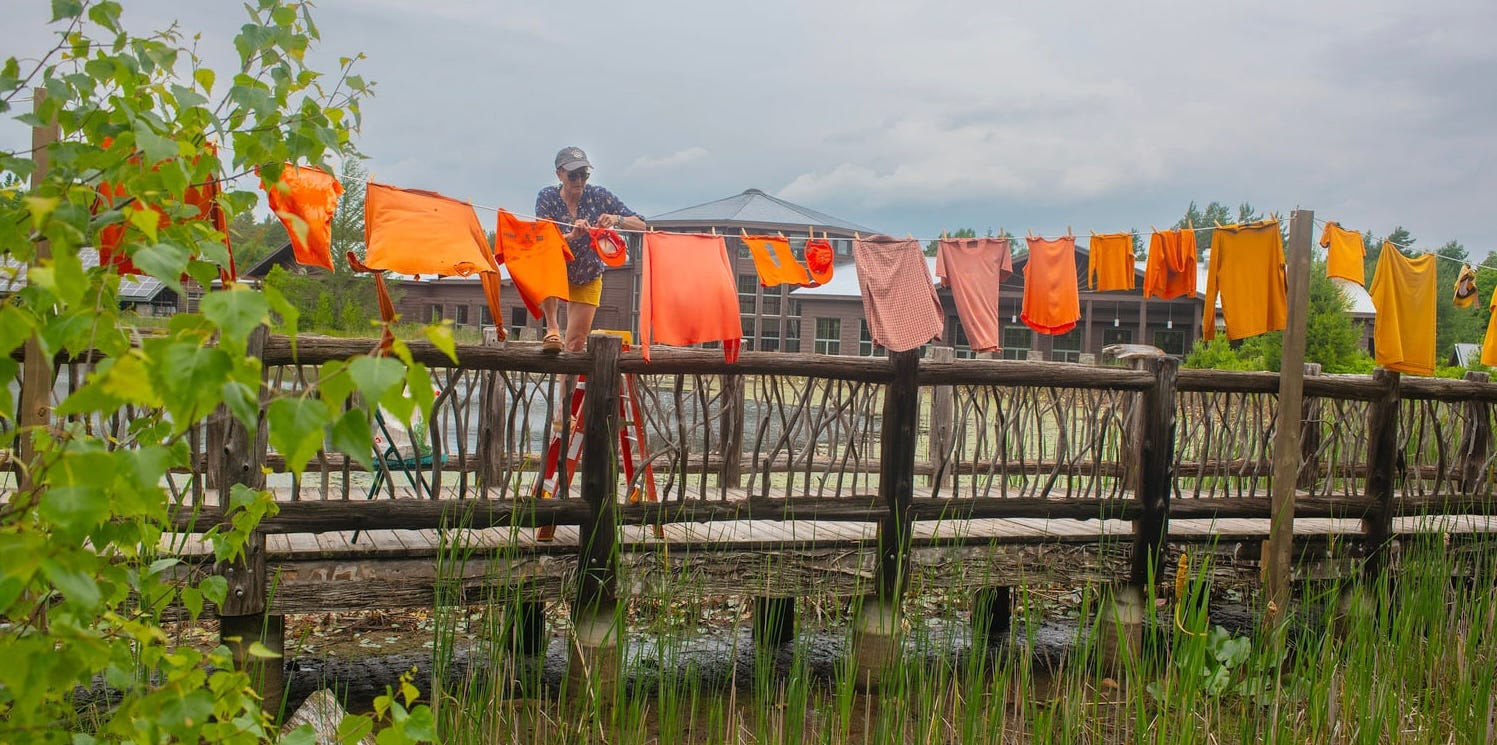
I was delighted to learn from Whitcomb’s Community Space gallery coordinator Vicki Copeland that she and her colleague Michelle Parker had planned an exhibition for the new year to “. . .highlight the intersection of farming and art through the work of artists who labor on the land.” This seemed an appropriate echo to Whitcomb’s display last spring, of a length of Wisconsin artist Brenda Baker’s installation “Clothesline” on view at The Wild Center in Tupper Lake.
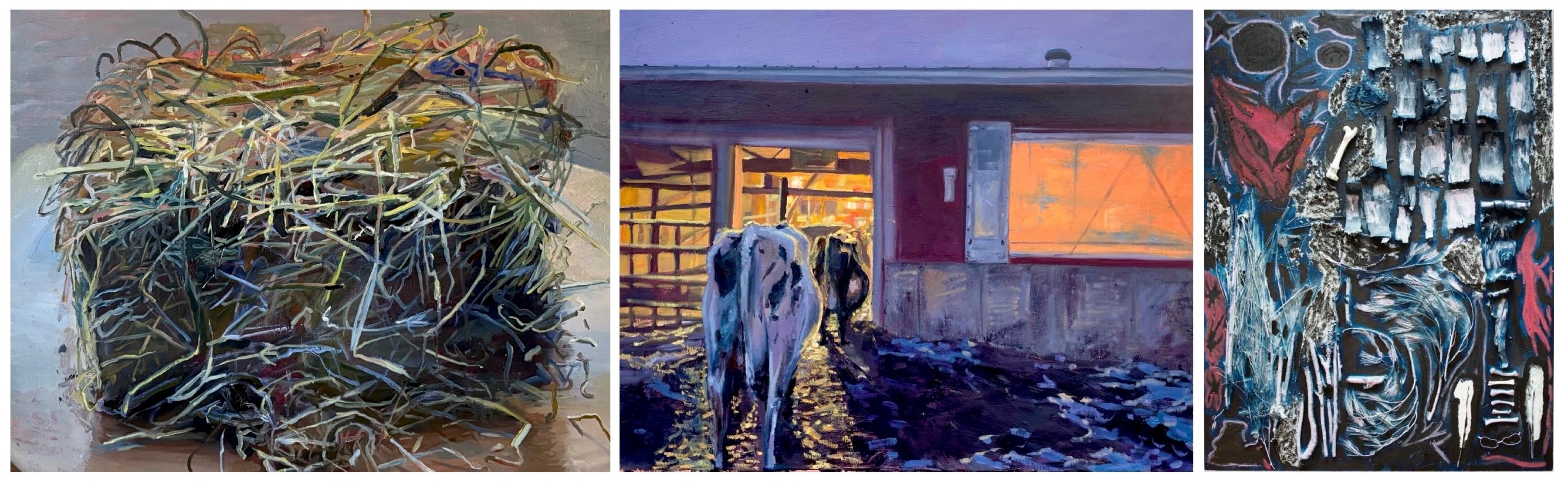
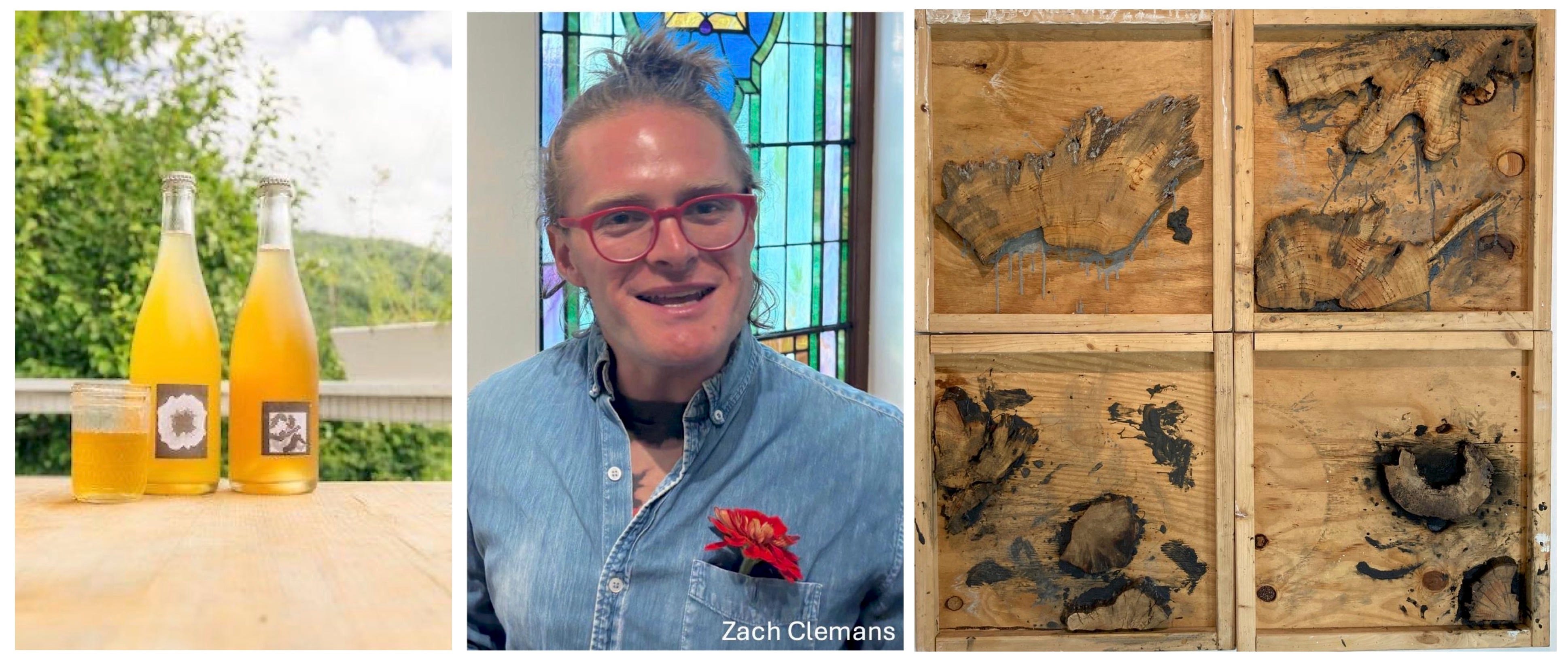
Among the artists featured in “Harvest: The Art of Local Farmers” is Zach Clemans, whom I met when he curated an emerging artists show at Keene Arts last summer. Clemans is a landscape painter who earned a BFA at SUNY Purchase before returning to the Adirondacks, where he produces small batch cider from wild-foraged fruit and runs an artisanal eatery at Sandy’s Local Cider & Food in Upper Jay.
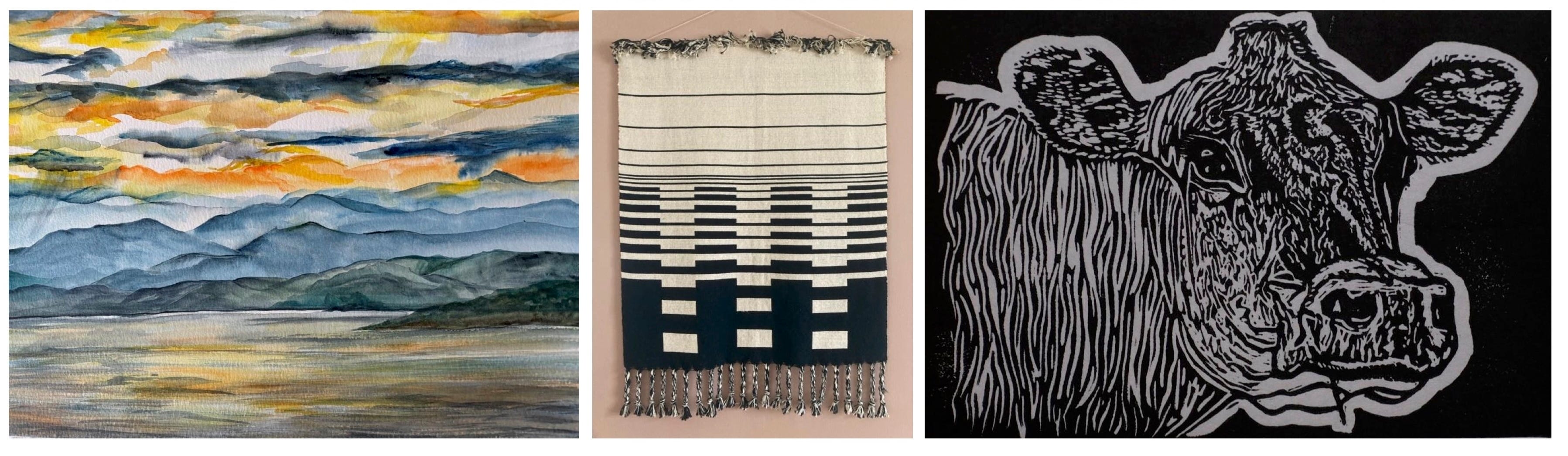
Other artists included in the exhibition are Champlain Area Trails treasurer and DaCy Meadow Farm owner Cynthia Ford-Johnston; Doliah Francis of Sand River Community Farm; Lotta Hauswaldt, Kirsten Liebl, Joanie McMahon, and William Glaser Wilson of Essex Farm; Benji Shankwitz of Mace Chasm Farm; Gizella Spencer of North Point Community Farm, and Sugar House Creamery’s Susie Tarnowicz, artist-in-residence at Asgaard Farm.
An article in the January 6, 2026 issue of The Guardian unpacked myriad ways one’s health can be improved by making and looking at art. Artists such as Thomas Hart Benton, Grant Wood, Eric Sloane, and Andrew Wyeth celebrated rural America. Writers and artists such as Louis Bromfield, Frederic Edwin Church, Arthur Dove, Robert Frost, Rockwell Kent, Barbara Kingsolver, Sally Mann, and Arthur Miller lived on working farms. Albert Einstein claimed “. . . The greatest scientists are always artists as well”. Perhaps the same can be said of these farmers.
“Harvest: The Art of Local Farmers” runs from January 8 to March 21. A vernissage with the artists occurs on Friday, January 9, from 5:00 to 7:00 at Whitcomb’s Gallery; 1598 NYS Route 22, across from the Whallonsburg Grange in Essex, NY. GPS: 44.26449° N, 73.40255° W. Gallery hours are Thursdays, Fridays and Saturdays: 11am to 3pm. For more information visit www.thegrangehall.info.
—James Lancel McElhinney © January 7, 2025
Thanks for reading TRUE PLACES. The foregoing are personal thoughts, impressions, and opinions. I hope any errors or omissions may be forgiven. If you enjoy these articles, please recommend TRUE PLACES to a friend.