AN IRISHMAN ABROAD
Paul Kane Documenting Frontier Canada

Paul Kane (1810-1871) was born at Mallow, County Cork, Ireland, and emigrated with his family to York (Toronto) in Upper Canada (Ontario) in 1819. Paul displayed artistic talent at an early age. Trained as a sign-painter and furniture-decorator, he received some formal training from a local professor. In 1836 he moved to Detroit, from whence he embarked on a career as an itinerant portrait-painter; traveling through the Midwest and into the Deep South. In 1841, he sailed from New Orleans to Marseilles to commence a walking-tour of Europe that led to Naples, Rome, Bolzano, Paris and London, where he may have met George Catlin—whose Indian Gallery was then on view at Piccadilly. In 1843, Kane returned to The States, where he resumed his portrait business in Mobile, Alabama. He returned to Canada the following year.
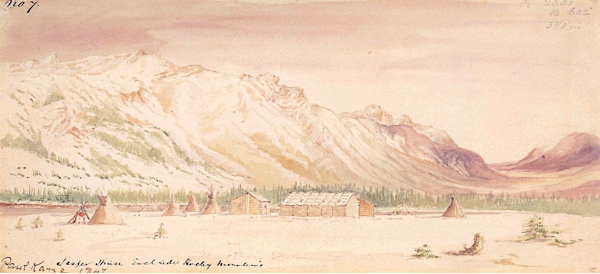
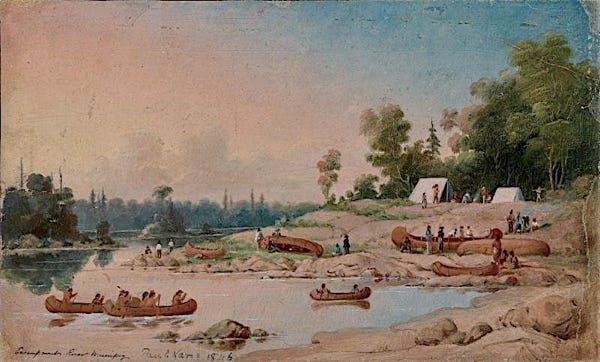
Kane's exposure to Catlin’s work and ideas about Indians as a "vanishing race" grew into an ambitious project of his own; to travel amongst the First Nations of Canada’s western territories, as Catlin had done south of the border. Like the Group of Seven more than sixty years later, Kane began by exploring the wild margins of the Great Lakes in 1845. With support from the Hudson’s Bay Company the following year, he traveled from Toronto to Fort Vancouver, located in present-day Washington State. The Oregon Treaty of 1846 established the boundary between Canada and the U.S. along the 49th parallel north of the equator. Kane was present during the transition period that spanned several years. In 1848, he returned to Toronto. An exhibition of his works was met with great acclaim. Apart from a stint as an expeditionary artist in 1849, Kane spent the remainder of his life in Toronto; raising a family and elaborating his fieldwork into finished paintings
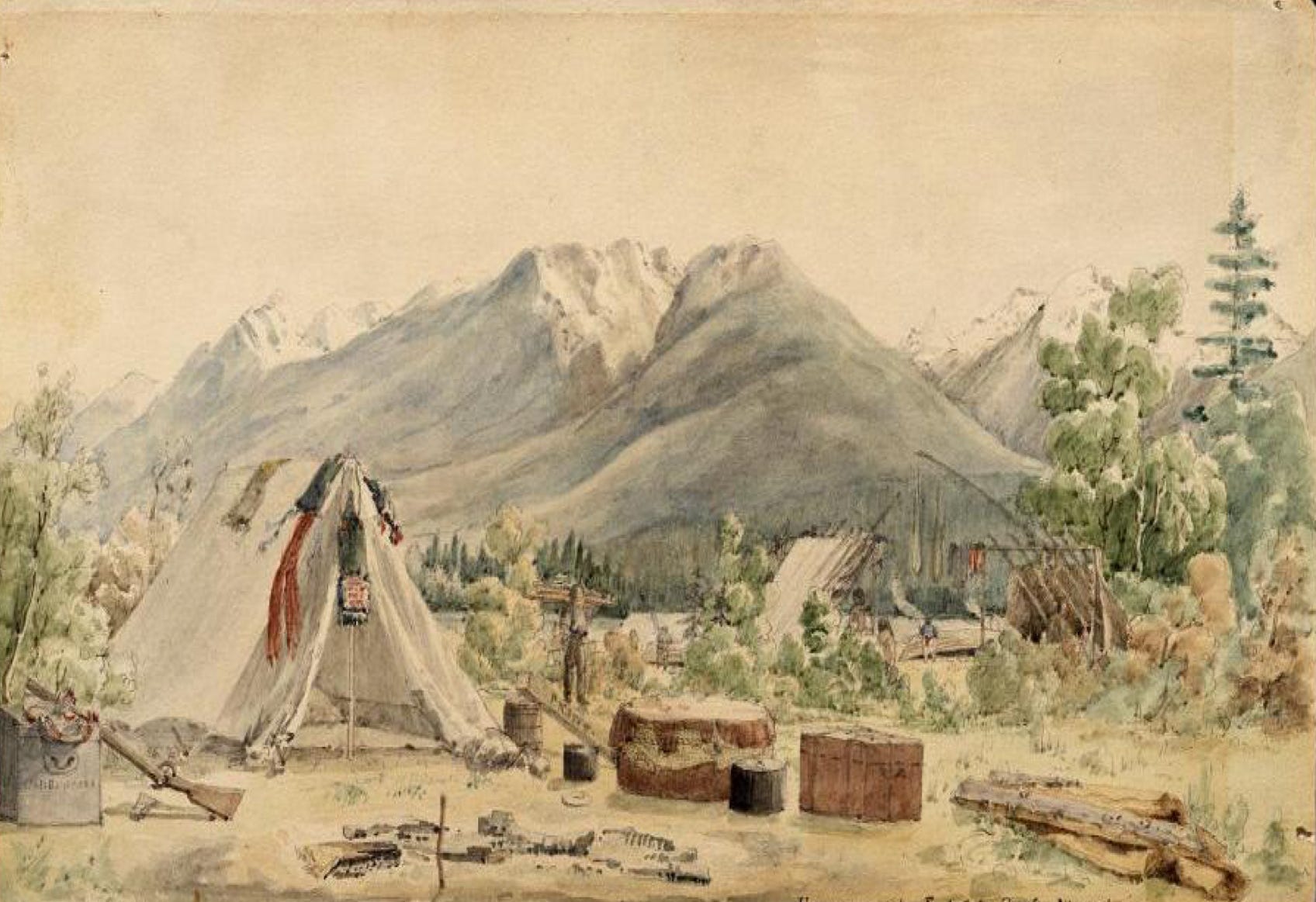
Like Thomas Davies in the 18th century, or Tom Thomson and The Group of Seven at the beginning of the 20th century, Kane’s work is rooted in expeditionary practice. As a traveler-artist, he has been described as the first Canadian tourist. Apart from inspiring eponymous parks, schools, and postage-stamps, Kane’s legacy contributed to the national policies concerning cultural resources. In the late 1950s a cache of Kane’s sketches, watercolors and paintings were put on the market by a member of his family. When the Canadian government passed on the offer, the lot was purchased by Texan art collectors Nelda C. and H.J. Lutcher Stark. These works now reside in the Stark Museum of Western Art in Orange, Texas (opened in 1978). Taking heat for allowing these works to slip through its grasp, the Ottawa government enacted laws prohibiting the possession of artworks deemed national treasures, by foreign owners outside of Canada.